


2026 Best Electrical MCCB Manufacturers for Global Buyers
Global buyers choosing an Electrical Mccb manufacturer in 2026 face a practical question: which supplier can protect equipment reliably across real operating conditions? Demand is growing. The International Energy Agency’s Electricity 2024 report projected global electricity demand growth averaging 3.4% annually from 2024 to 2026. More electrical loads mean protection choices deserve careful scrutiny.
IEA Executive Director Fatih Birol described the wider shift: “The Age of Electricity is upon us.” His observation concerns electrification, not MCCBs specifically, but it highlights why dependable circuit protection matters. In a factory, a breaker may need to interrupt a fault quickly, fit a crowded panel, and tolerate repeated switching. Small differences in breaking capacity, trip characteristics, and product documentation can have large consequences.
Details matter. IEC 60947-2 provides a key international framework for low-voltage circuit-breakers. Buyers should still check the applicable local requirements, test evidence, and certifications for each market. A familiar logo is not enough. Ask manufacturers for clear ratings, traceable test reports, production-quality controls, and responsive technical support. Compare warranty terms and spare-parts availability, too.
This guide reviews leading MCCB manufacturers for global buyers, considering product range, technical credibility, manufacturing reach, and support. Market rankings can vary by region and product category; no single shortlist suits every project. That deserves a second look. The best choice is the one whose verified performance matches the installation—not merely the one with the boldest catalogue.
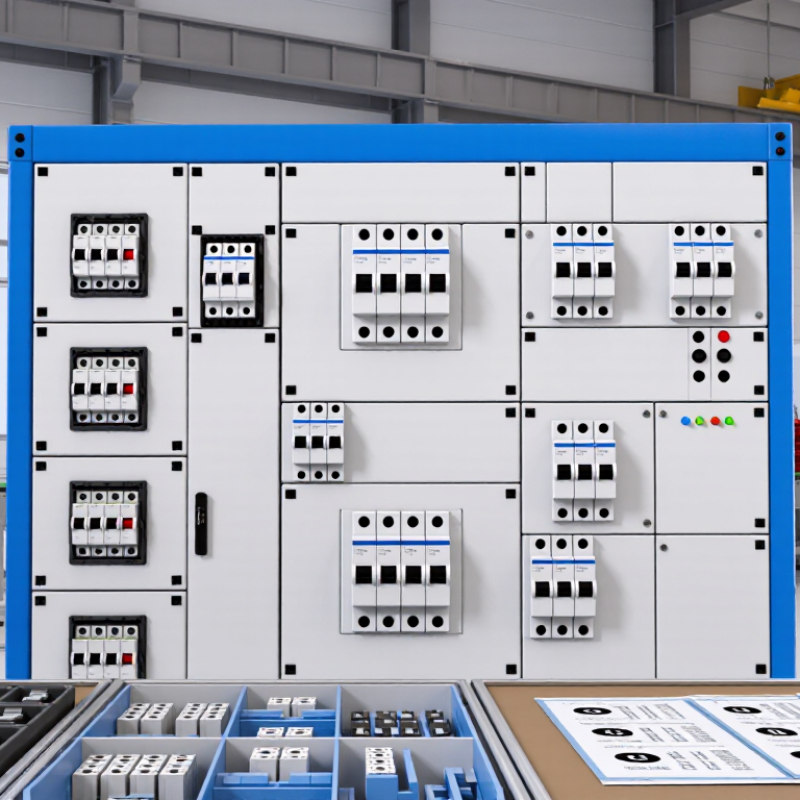
Understanding MCCBs and Their Role in Electrical Protection
Molded-case circuit breakers (MCCBs) protect low-voltage circuits from overloads and short circuits. When current exceeds a safe level, a thermal-magnetic or electronic trip unit opens the contacts. For a sudden fault, fast tripping can limit damage to cables and connected equipment. Many MCCBs also provide circuit isolation, while adjustable settings help engineers coordinate protection across a distribution board. A common design mistake is choosing a breaker by rated current alone. Its interrupting capacity must also match the prospective fault current at the installation point. Small details matter.
The IEA’s Electricity 2024 report projects global electricity demand will grow by an average of 3.4% annually from 2024 to 2026. More loads and denser electrical systems make dependable protection important, but demand growth alone cannot determine breaker selection. Engineers still need load data, conductor limits, ambient temperature, and coordination checks. IEC 60947-2 specifies requirements for low-voltage circuit-breakers, including MCCBs; buyers should verify the applicable edition and test documentation. A label is not enough. Trip curves may look tidy on screen, yet field conditions and maintenance affect performance. Worth checking again.
2026 Best Electrical MCCB Manufacturers for Global Buyers - Understanding MCCBs and Their Role in Electrical Protection
| Evaluation Dimension | Relevant MCCB Fact or Specification | What Global Buyers Should Verify |
|---|---|---|
| Product standard | IEC 60947-2 covers low-voltage circuit-breakers, including many MCCBs used in industrial and commercial distribution. | Check the applicable standard and edition, product test documentation, and whether the exact model is covered by the stated certification. |
| Rated current (In) | MCCBs are available across a wide range of current ratings. The available ratings depend on the product family and manufacturer. | Confirm the frame size, rated current, adjustable settings, ambient-temperature conditions, and coordination with the protected cable and load. |
| Breaking capacity | Icu is the rated ultimate short-circuit breaking capacity; Ics is the rated service short-circuit breaking capacity. Both are stated at specified operating voltages. | Compare the published Icu and Ics values at the intended system voltage with the prospective short-circuit current at the installation point. |
| Trip-unit technology | MCCBs may use thermal-magnetic or electronic trip units. Available protection functions and adjustment ranges vary by model. | Check required overload and short-circuit protection settings, adjustment ranges, trip indication, and compatibility with the coordination study. |
| Number of poles | Common configurations include three-pole and four-pole breakers; other configurations depend on the product range and application. | Confirm the system arrangement, neutral switching requirements, pole protection, and local installation rules. |
| Voltage and frequency | A breaker’s ratings and performance are specified for particular operating voltages and, where applicable, frequencies. Ratings can differ between AC and DC applications. | Verify the exact AC or DC application rating, system voltage, frequency, and any series-pole requirements for DC use. |
| Accessories and integration | Depending on the model, accessories can include auxiliary contacts, alarm contacts, shunt trips, undervoltage releases, and motor operators. | Confirm accessory compatibility with the exact breaker, control voltage, wiring diagrams, and any required communication or remote-operation functions. |
| Environmental suitability | Operating limits, enclosure protection, and derating depend on the breaker and installation conditions; they should be taken from the product documentation. | Review temperature and altitude limits, enclosure requirements, pollution conditions, and any required derating for the installation site. |
| Certification and documentation | Certification and regulatory requirements vary by destination market and product application. | Request current certificates, test reports, technical data sheets, installation instructions, and the applicable declarations for the destination market. |
| Supply and after-sales support | Lead times, spare-part availability, technical support, and warranty terms are supplier- and market-specific rather than universal MCCB specifications. | Assess local service coverage, delivery commitments, replacement-part access, warranty conditions, and technical assistance in the required language and time zone. |
Note: MCCB ratings and available features vary by model. Use the manufacturer’s documentation and a qualified electrical design review to confirm suitability for each installation.