

What Is the Best Heavy Duty Truck Radiator in 2026?

Choosing the best Heavy duty truck radiator in 2026 is not a simple brand comparison. The right unit must control engine temperature under the truck’s actual workload, climate, and maintenance conditions. A radiator that performs well on highway routes may struggle in slow, dusty work. Fit matters, too.

The financial stakes are real. The American Transportation Research Institute’s An Analysis of the Operational Costs of Trucking: 2024 Update reported average operating costs of $2.270 per mile in 2023. That figure covers many expenses, not radiator failures alone. Still, it shows why unplanned downtime and repeat repairs deserve attention. A leaking seam or clogged core can turn a routine inspection into lost hours.

Look beyond advertised cooling capacity. Compare core construction, material, pressure rating, dimensions, warranty terms, and parts availability. Check that specifications match the engine and vehicle configuration, then confirm them with the manufacturer or a qualified technician. In the sections ahead, we’ll weigh these details against demanding operating conditions and common replacement needs. No single model wins every route. That is the less tidy answer, but it is the honest one. A polished product page cannot replace verified fitment, clear documentation, and evidence from service use.
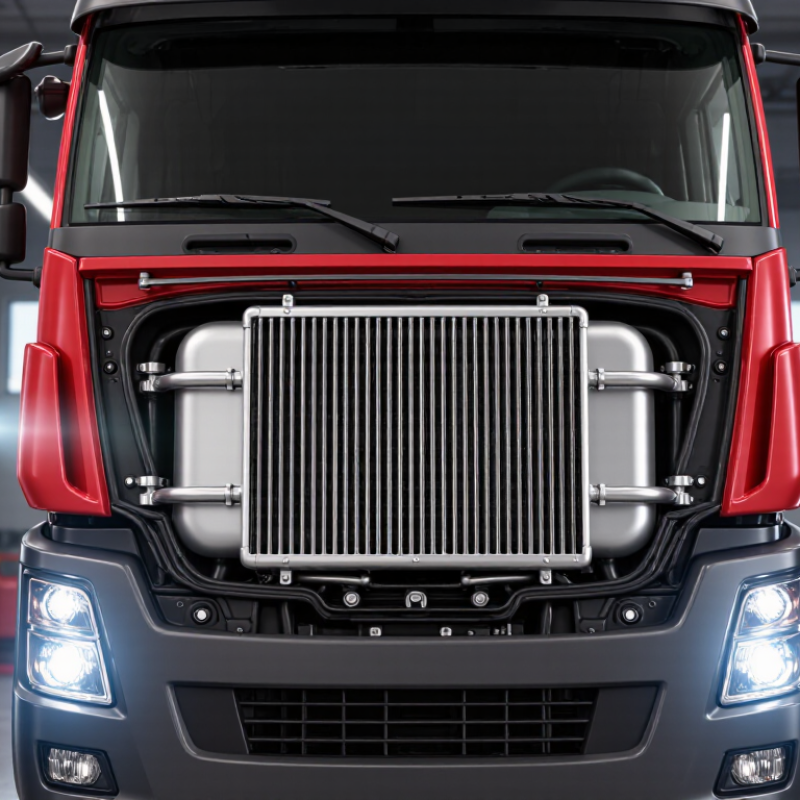
What Is the Best Heavy Duty Truck Radiator in 2026?

What a Heavy-Duty Truck Radiator Does

A heavy-duty truck radiator transfers engine heat to the outside air. Hot coolant enters the radiator, flows through narrow tubes, and releases heat through metal fins. A fan and road airflow carry that heat away. Cooler coolant then returns to the engine, helping it maintain a stable operating temperature under load.

This matters on long climbs, in slow traffic, and while hauling heavy cargo. NIST reference data puts water’s specific heat near 4.18 kJ/kg·K at room temperature, which helps explain its ability to carry heat. Real coolant mixtures behave differently, and airflow, radiator condition, and system pressure all affect performance. A single dashboard reading cannot reveal every fault. That is an imperfect diagnostic shortcut.

Tips: Check coolant level only when the system is cool. Look for bent fins, debris, leaks, or a fan that fails to engage. Follow the vehicle maker’s service schedule, and use the specified coolant mixture. A clean radiator can still underperform if airflow is blocked.

How Truck Operating Conditions Affect Cooling Needs

A heavy-duty truck radiator should match the work, not just the engine rating. A tractor hauling uphill in summer produces a different cooling demand from one cruising steadily on open roads. Slow traffic, frequent stops, dusty routes, and high ambient temperatures can reduce airflow or add heat when the truck needs cooling most. That distinction matters.

The U.S. Department of Energy’s Alternative Fuels Data Center estimates that a heavy-duty truck can burn about 0.8 gallons of fuel per hour while idling. The figure varies with engine and accessory loads, but it shows why prolonged queues and worksite idling deserve attention. With little road speed to push air through the core, fan capacity and a clean radiator face become especially important. Dust and debris build up. Small things, but they count.

For fleet decisions, match radiator capacity and airflow to the harshest regular duty cycle, not an occasional ideal run. Check coolant temperature under loaded climbs, low-speed operation, and hot-weather conditions; also inspect fan controls, shrouding, and coolant flow. The American Transportation Research Institute’s 2024 Operational Costs of Trucking report put average operating costs at $2.27 per mile for 2023. That is not a radiator-cost figure, but it underlines why preventable downtime and maintenance matter. I would still avoid choosing by size alone: a larger core cannot compensate for poor airflow or neglected maintenance.

What Is the Best Heavy Duty Truck Radiator in 2026? — How Truck Operating Conditions Affect Cooling Needs

Operating Condition Cooling-System Challenge Radiator Design to Consider Selection Checks
Long-distance highway hauling Extended engine load and sustained heat rejection, often with steady airflow through the grille. A correctly sized, high-efficiency radiator matched to the engine and original cooling-system layout. Confirm engine-specific fit, airflow direction, mounting points, hose connections, and compatibility with the fan and shroud.
Low-speed work, stop-and-go traffic, or frequent idling Reduced ram airflow can make fan performance and airflow through the core especially important. A radiator that works with the truck’s specified fan, shroud, and airflow arrangement; consider fan-system condition as well as core capacity. Inspect the fan clutch or fan controls, shroud, grille, and condenser for damage or blockage. A larger core alone may not solve an airflow problem.
Steep grades, heavy loads, or towing High engine load increases heat production, particularly during long climbs and in warm weather. A heavy-duty replacement with cooling capacity appropriate for the engine, vehicle configuration, and rated duty cycle. Check the manufacturer’s application specification and the condition of the thermostat, water pump, coolant, and pressure cap.
Hot climates or prolonged operation at high ambient temperatures Hotter incoming air reduces the temperature difference available for transferring heat from the coolant. A well-maintained, correctly specified core with unobstructed airflow; suitable fin and tube construction depends on the vehicle application. Clean debris from the radiator and nearby heat exchangers. Verify coolant concentration and pressure-cap rating against vehicle specifications.
Dusty, muddy, or debris-heavy environments Fins can become clogged or damaged, restricting airflow and reducing heat transfer. A serviceable design that can be inspected and cleaned without damaging the core; protective screens should not unduly restrict airflow. Use appropriate cleaning methods and inspect fins regularly. Check for packed debris between the radiator, charge-air cooler, and air-conditioning condenser.
Corrosive environments or frequent coolant changes Incorrect coolant chemistry, contamination, or mixed metals can accelerate internal corrosion and leakage. Choose the core material and construction specified for the truck, and use coolant compatible with the engine and radiator materials. Follow the vehicle maker’s coolant specification and service interval. Do not select coolant by color alone or mix incompatible formulations.
Vibration-intensive work or rough-road service Repeated vibration and movement can stress brackets, seams, tanks, and hose connections. A correctly mounted radiator with application-matched supports and properly maintained isolators. Inspect mounts, fasteners, hoses, and nearby components for rubbing or stress. Confirm the replacement matches the original mounting arrangement.

Practical takeaway: The best heavy-duty truck radiator is the one specified for the exact truck and engine, with sufficient cooling capacity for the real duty cycle. Verify fitment and cooling-system requirements using the vehicle’s service information; also diagnose airflow, coolant, and engine-system issues before replacing the radiator.

Common Radiator Types and Construction Materials

Heavy-duty truck radiators are commonly built with copper-brass or aluminum cores. Copper-brass construction uses copper tubes and fins joined to brass headers or tanks. It can be repaired in some cases, but it is often heavier. Aluminum cores use welded tubes and fins, reducing weight and allowing compact designs. Some assemblies pair aluminum cores with reinforced composite tanks. Construction varies, so check the truck’s service requirements before comparing materials.

Radiators also differ in core layout and coolant flow. A downflow design moves coolant from an upper tank to a lower one; a crossflow design sends it across the core between side tanks. Tube-and-fin spacing affects heat transfer, airflow, and how easily debris can collect. Finer fins may offer more surface area, but bent fins can restrict airflow. That matters. In dusty work, cleaning access may be just as important as a published cooling rating. Not always obvious.

There is no tidy winner for every truck. Copper-brass may suit an operation that values repairability, while aluminum can help reduce weight. Yet installation space, vibration, pressure requirements, and access to replacement parts also matter. A radiator that fits poorly can cause trouble, even when its material looks ideal on paper. Inspect the core, tanks, seams, and mounting points, and compare specifications with the engine and duty cycle. One detail is easy to miss: the fan and shroud must move air through the core effectively.

Key Factors for Comparing Radiator Performance and Durability

What Is the Best Heavy Duty Truck Radiator in 2026?
Key Factors for Comparing Radiator Performance and Durability

For a heavy-duty truck, the best radiator is the one that handles its real workload and fits the cooling system correctly. Compare documented heat-rejection capacity under stated operating conditions, not just core size or a broad performance claim. Check the core material, tube design, fin spacing, and pressure-drop data. These details affect heat transfer, airflow, and the strain placed on the cooling system.

Dense fins may increase cooling surface area, but they can also collect dust and debris in demanding work environments. Wider spacing may be easier to clean. Fit matters. Confirm the inlet and outlet locations, mounting points, fan clearance, and capacity against the truck’s specifications. A radiator that requires improvised brackets or hoses may create avoidable maintenance problems.

Durability deserves equal attention. Look for corrosion-resistant construction, secure joints, and support against vibration, especially on trucks exposed to rough roads and long operating hours. Ask how the unit is tested for leaks and pressure, and review its warranty terms. Also inspect coolant condition and service history before blaming the radiator; neglected maintenance can shorten the life of even a well-built core. A specification sheet helps, but it cannot tell the whole story. Compare verified test information with the truck’s actual duty cycle, and acknowledge that no single design suits every route or climate.

How to read this: Approximate thermal conductivity at room temperature, in watts per meter-kelvin (W/m·K). Actual radiator performance and durability also depend on core design, coolant and airflow, corrosion resistance, and vibration tolerance. Conductivity alone does not determine the best heavy-duty radiator.

How to Choose a Heavy-Duty Truck Radiator in 2026

Choosing a heavy-duty truck radiator in 2026 starts with the truck’s exact configuration. Match the engine, model year, cooling package, and transmission cooler connections. Check the core dimensions and mounting points, not just the overall width. Small mismatches matter. A radiator can look right but leave a hose or fan shroud out of position.

Consider how the truck works. Long climbs, heavy loads, stop-and-go traffic, and hot weather all increase cooling demand. Compare core design, fin density, material, and rated heat capacity against the vehicle’s specifications. More rows do not automatically mean better cooling; restricted airflow can offset the gain. Check that the fan, shroud, and grille are clean and unobstructed. They are part of the cooling system, too.

Before ordering, inspect the old radiator for leaks, corrosion, blocked passages, and damaged fittings. Confirm compatibility with the specified coolant and pressure cap, and ask about repair access and warranty coverage. A new radiator may not fix overheating caused by a weak water pump or trapped air. I may be cautious here, but replacing parts without checking the full system can waste time. Verify fitment against the vehicle identification details and service information.