

Why Choose a Dust Proof Mask for Work?

A Dust Proof Mask can make a dusty workday safer, but the label alone does not guarantee protection. OSHA estimated that about 2.3 million U.S. workers were exposed to respirable crystalline silica in construction and general industry. Fine dust can hang in the air after cutting, grinding, or sweeping, even when the room looks clear. That detail matters.

The right respirator depends on the hazard, exposure level, fit, and task. NIOSH explains that approved respirators are tested against specific performance requirements; a loose seal, damaged strap, or incompatible facial hair can undermine protection. Dr. John Howard, longtime NIOSH Director, has emphasized a practical point: “Respirators must be properly selected, fitted, and used to protect workers.” Treat that as a routine, not a slogan. Check the seal before entering dusty areas, and replace filters according to their instructions.

There is no single mask for every job. A disposable filtering facepiece may suit some conditions, while other tasks require a different respirator and a formal workplace assessment. Product descriptions can be vague. Read the approval markings and manufacturer guidance, and ask a qualified safety professional when dust type or exposure is uncertain. OSHA’s silica estimate is a U.S. figure, not a measure of every workplace worldwide. Still, it shows why dust control deserves attention. A mask is one layer of protection, not a substitute for ventilation, dust suppression, or safer work practices.
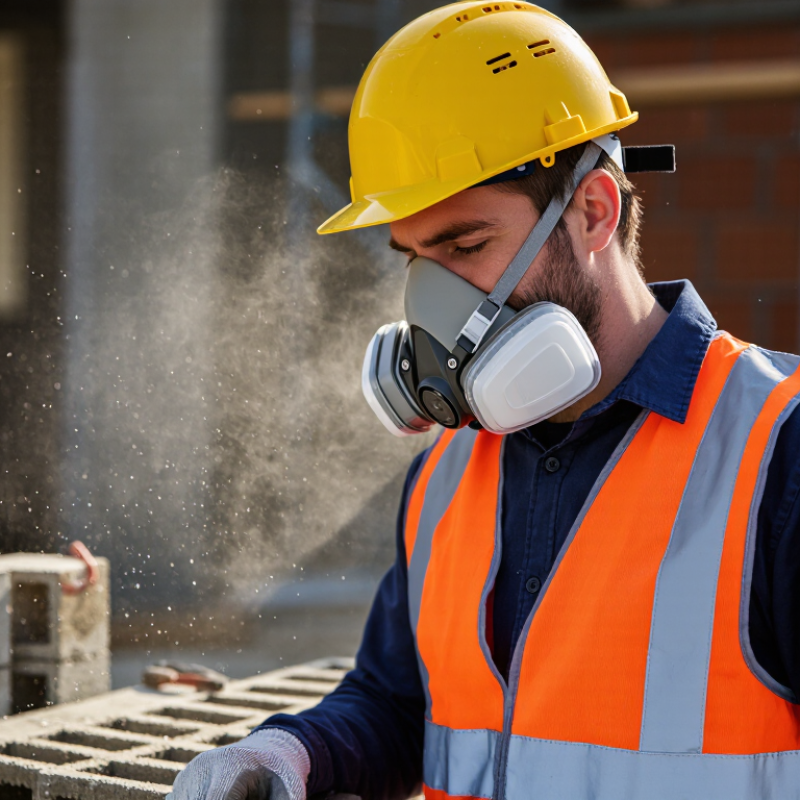
Why Choose a Dust Proof Mask for Work?

What a Dust-Proof Mask Is and How It Works

A dust-proof mask is a face covering designed to reduce the amount of airborne dust you breathe in. It usually has a filtering layer that captures particles as air passes through it. The mask works best when its edges sit closely against your face, leaving little room for dusty air to slip around the filter. That seal matters. A loose fit can undermine a good filter.

A dust mask is not automatically suitable for every workplace hazard. It may reduce exposure to common particles from sweeping, sanding, or handling dry materials, but it does not necessarily protect against gases or vapors. Check the product’s stated use and the risks of the specific task. At a workbench, a practical fit check means breathing normally and noticing whether air leaks near the nose or cheeks. Facial hair can interfere with the seal. Replace a mask or filter when it becomes damaged, damp, or difficult to breathe through. Comfort matters too. If it keeps shifting during a job, protection may suffer, even if the mask looks sturdy. That detail is easy to overlook.

How Workplace Dust Can Affect Health

Fine dust can stay airborne after a cut, sweep, or pour looks finished. Some particles are small enough to reach deep into the lungs. Depending on the material, repeated exposure can irritate airways or contribute to asthma, chronic lung disease, and, in the case of respirable crystalline silica, silicosis and lung cancer. The International Agency for Research on Cancer classifies crystalline silica dust as carcinogenic to humans. The risk is easy to underestimate: a faint haze may look harmless, while the finest particles are difficult to see.

The UK Health and Safety Executive estimates that around 12,000 deaths each year involve occupational lung disease and cancer linked to past workplace exposures. This figure covers more than dust alone, but it shows why exposure matters over time.

For silica, the US Occupational Safety and Health Administration sets a permissible exposure limit of 50 micrograms per cubic metre as an eight-hour time-weighted average. A properly selected, well-fitting dust mask can reduce inhalation, but it cannot replace dust extraction, wet methods, or good work practices. Fit matters. A gap near the nose can let particles in. And, honestly, workers may not notice a poor fit until the task is already underway.

Which Work Tasks Call for Dust Protection

Why Choose a Dust Proof Mask for Work?

Which Work Tasks Call for Dust Protection

Dust protection is useful whenever a task sends fine particles into the air. Sanding wood, cutting drywall, and sweeping a dusty floor can expose workers to particles they may not notice until sunlight catches them. Drilling or cutting concrete deserves extra care because it can create respirable crystalline silica. That dust is easy to underestimate. A basic face covering may not provide suitable protection for every task.

Match the protection to the material, the amount of dust, and how long the work lasts. Check product guidance and workplace safety information to select an appropriate particulate respirator. A close seal matters: facial hair, a loose nose bridge, or worn straps can let dust bypass the filter. If the job creates heavy dust, improve ventilation or use dust extraction rather than relying on a mask alone. Damp cleanup or a HEPA-filtered vacuum can also limit particles during cleanup.

Small jobs count too. Drilling a few holes indoors or brushing debris from a workbench can make dust airborne. I might assume a quick task needs no preparation, but that is not always a sound judgment. A dust mask does not protect against gases or vapors, and damaged or damp equipment may not work as intended. Replace it when breathing becomes difficult, and reassess protection when the material or task changes.

Why Choose a Dust Proof Mask for Work? — Which Work Tasks Call for Dust Protection

Dust protection can reduce inhalation of airborne particles during certain tasks. The right controls and respirator depend on the material, exposure level, task duration, and workplace risk assessment.

Work Task Dust or Particles That May Be Generated When Dust Protection May Be Needed Practical Safety Considerations
Cutting, drilling, or grinding concrete, masonry, or stone Fine mineral dust, potentially including respirable crystalline silica When dust controls do not adequately control airborne exposure, or when a risk assessment requires respiratory protection Use suitable wet methods or local exhaust where practical. Select respiratory protection based on the assessment and applicable workplace requirements.
Sanding or cutting wood Wood dust and fine sanding particles During dusty operations, especially with power tools or limited ventilation Use tool-connected extraction or effective ventilation. Choose a properly fitted particulate respirator if additional protection is needed.
Dry sweeping or cleaning dusty areas Settled dust stirred back into the air When cleanup may create airborne dust that cannot be controlled by safer cleaning methods Prefer damp cleaning or a suitable HEPA-filtered vacuum over dry sweeping or compressed air. Assess the dust before cleanup.
Handling or installing fibrous insulation Fibers and other airborne particles that may irritate the respiratory tract When work creates airborne fibers, particularly in enclosed or poorly ventilated areas Follow the product safety information. Eye, skin, and respiratory protection may all be appropriate depending on the material and task.
Grain handling, feed handling, or dusty agricultural work Grain dust, plant particles, and potentially mold or other biological material When handling or moving material creates visible or sustained airborne dust Use ventilation and dust-control methods where possible. The required protection depends on the specific material and exposure assessment.
Demolition or renovation of older materials Potentially hazardous dust, which may include asbestos- or lead-containing material Only under a task-specific assessment and the required regulated work controls Do not rely on an ordinary dust mask. Stop work if hazardous material is suspected and follow applicable testing, containment, and respiratory-protection requirements.

Important: A particulate respirator does not protect against gases or vapors. Tight-fitting respirators require appropriate selection, fit testing, and use under a respiratory-protection program where applicable. A mask is not a substitute for eliminating dust or using effective engineering controls.

How to Choose a Mask for Workplace Conditions

Choosing a mask starts with the hazard, not the label. Check the task, product safety data sheet, and workplace assessment: sanding wood creates particles, while some coatings may release vapors that a particle-filtering mask cannot remove. A NIOSH-approved N95 filters at least 95% of airborne particles under laboratory test conditions, according to CDC/NIOSH. That figure is not a guarantee of protection if the respirator leaks or is used for the wrong hazard.

Fit matters. A tight seal is essential, so try the model and size specified for the wearer, then check for leaks each time it is put on. OSHA assigns a protection factor of 10 to a properly fitted half-mask air-purifying respirator in its respiratory protection standard. Facial hair along the sealing edge can prevent a reliable fit. Comfort counts, too: a mask that slips when you bend over or fogs your safety glasses may not stay on during a full shift.

Match the mask to the dust level, work duration, heat, and need to communicate. Replace it when damaged, wet, dirty, or difficult to breathe through, following workplace procedures. I once thought a thicker mask must be safer; that is an easy assumption, but filtration, fit, and hazard type matter more. A supervisor or qualified safety professional can help resolve uncertainty before the job begins.

How to Wear and Maintain a Dust-Proof Mask

A dust-proof mask protects only when its type matches the hazard and it fits your face. A NIOSH-approved N95 filtering facepiece is tested to filter at least 95% of airborne particles under laboratory conditions; real-world protection depends on proper fit and use (NIOSH, Respirator Types). No mask suits every dusty job.

Before work, inspect the straps, nose clip, and mask for tears or loose edges. Place it over your nose and chin, then press the nose clip with both hands. Breathe in and out gently to check for leaks. OSHA’s respiratory-protection standard requires a user seal check each time a tight-fitting respirator is put on. It also requires fit testing before initial use and at least annually (29 CFR 1910.134). Facial hair at the sealing surface can interfere with the seal.

Remove the mask by its straps, not the dusty front. Follow the manufacturer’s cleaning instructions for reusable models; do not wash disposable filtering facepieces. Replace a disposable mask if it becomes wet, damaged, visibly dirty, or harder to breathe through. Store reusable masks dry and away from chemicals. Fit matters more. A rushed seal check is easy to skip, and that small shortcut can leave gaps where dust enters.

Why Choose a Dust-Proof Mask for Work?

Choosing a properly fitted respirator with a suitable filter can help reduce exposure to airborne particles. The chart compares the minimum particle-filtration efficiencies specified for selected respirator classes. These standards use different test methods, so the percentages are not a direct measure of overall wearer protection.

How to wear and maintain a dust-proof mask: Check that the mask is suitable for the hazard, follow the manufacturer’s instructions, and make sure it fits snugly. Perform a user seal check each time you put on a tight-fitting respirator. Inspect it before use; replace it if it is damaged, dirty, or difficult to breathe through. Do not wash disposable filtering facepieces. Clean and store reusable respirators according to their instructions.

Filter-efficiency figures: NIOSH respirator classifications (N95: at least 95%; P100: at least 99.97%) and EN 149 classifications (FFP2: at least 94%; FFP3: at least 99%). Filtration efficiency alone does not guarantee protection; fit and correct use matter.