How to Choose the Right Micro Switch for Your Project?
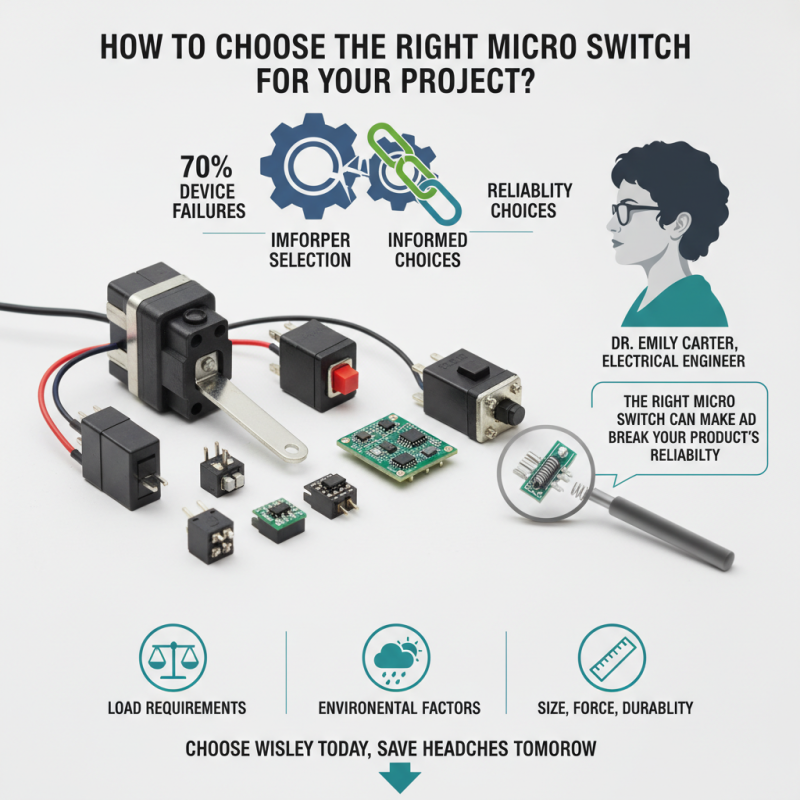
When embarking on a new project, selecting the appropriate micro switches can be a critical decision. Data from the Switch Manufacturers Association indicates that nearly 70% of device failures stem from improper switch selection. This statistic underscores the importance of thorough research and informed choices.
Renowned expert Dr. Emily Carter, an electrical engineer specializing in control systems, once stated, "The right micro switch can make or break your product's reliability." Understanding load requirements and environmental factors is vital. Different applications demand unique specifications, and a mismatch can lead to performance issues or even device failures.
Navigating the variety of micro switches available can be daunting. Factors such as actuation force, durability, and size all come into play. In this intricate field, taking a moment to reflect on your project’s specific needs is essential. Choosing wisely today will save headaches in the future.
Understanding Micro Switches: Definition and Functionality
Micro switches are essential components in various devices. They act like tiny mechanical switches. When you press them, they complete an electrical circuit. This allows for precise control in applications like appliances, machinery, and more. Understanding their functionality is crucial when selecting the right type for your project.
Consider how micro switches operate. They use a lever mechanism. This mechanism ensures they activate with minimal force. It’s important to match the switch’s rating with the voltage of your circuit. Not paying attention can lead to failures or malfunctioning devices.
Tip: Always check the switch's specifications. Look for details like actuation force, travel distance, and electrical ratings. Ensure the switch can handle the load of your application.
The variety of micro switches is vast. Different designs can affect performance. Sometimes a switch that looks suitable may not be ideal in practice. Always prototype your application with the chosen switch to see if it meets your needs.
Tip: Use a multimeter to test the switch functionality. This simple step can prevent future issues. Always go for quality, even if it means spending a bit more.
Types of Micro Switches: A Comprehensive Overview
Choosing the right micro switch is essential for any project. Micro switches come in various types, each suited for specific applications. The primary types include basic, snap action, and rotary. Basic switches are simple and reliable. Snap-action switches offer faster activation. Rotary switches provide versatility and can handle various motions.
In a study by Future Market Insights, micro switch demand is expected to grow by 5.3% annually. This data highlights their significance in industries like automotive and appliances. For instance, automotive application accounts for about 25% of the total market share. Such figures emphasize the need to select the right type based on your project requirements.
Tip: Always consider switch ratings. The voltage and current ratings must match your project's needs.
Choosing improperly can lead to malfunctions. A micro switch with low ratings might fail under high load. Test for compatibility to avoid potential failures down the road.
Tip: Ensure environmental conditions are considered. Moisture and temperature can affect switch performance.
Factors to Consider When Selecting a Micro Switch
When selecting a micro switch, several key factors play a crucial role. The actuator type is one of them. Different projects require specific actuator styles. Options include push-button, roller, or toggle. Each style influences how the switch will interact with other components. According to industry reports, nearly 55% of switch failures stem from poor actuator selection. It's essential to match the actuator with your project's needs.
Another important consideration is the electrical ratings. This includes voltage and current specifications. A switch must handle the load without overheating or failing. For example, many applications require a switch rated above 10A. However, some devices only need 100mA. Choosing a switch with the wrong rating can lead to significant issues. Over 40% of device malfunctions are attributed to incorrect rating choices. This area needs careful attention to avoid mishaps.
Environmental conditions can't be overlooked either. Humidity, temperature, and dust can impact switch performance. A switch made for indoor use may not withstand outdoor conditions. The failure rate can rise significantly in unsuitable environments. Around 25% of micro switch failures are linked to environmental factors. Be mindful of the surroundings where the switch will operate. This consideration can save time and resources in the long run.
How to Choose the Right Micro Switch for Your Project?
| Factor | Description |
| Operating Force | The amount of force required to actuate the switch. Common options include light, medium, and heavy actuation force. |
| Electrical Rating | The maximum voltage and current the switch can handle without failure. Must be compatible with your circuit. |
| Contact Configuration | Types of contacts such as SPST, DPST or SPDT, which determine how the switch connects or disconnects circuits. |
| Mounting Type | The method of mounting such as panel mount, PCB mount, or surface mount affects installation and application. |
| Environment | Consider the environmental conditions like temperature, humidity, and exposure to dust or moisture. |
| Size | Dimension of the switch should fit within the design constraints of your project. |
| Life Cycle | The number of operation cycles the switch can handle before failure; typically specified in tens of thousands to millions of cycles. |
| Cost | The budget available for the switch can influence selection—balancing quality and affordability is key. |
Specifications and Ratings: Key Parameters Explained
Choosing the right micro switch for your project involves understanding its specifications and ratings. One important parameter to consider is the switch's contact rating. Typically expressed in amps and volts, these ratings define the maximum load the switch can handle. For instance, a common rating might be 3A at 250VAC. Ensuring your switch can handle the expected load is crucial to avoid failure.
Another key parameter is the actuation force. This force determines how much pressure is required to operate the switch. A lighter actuation force may enhance user experience but could lead to accidental activation. Thus, balancing sensitivity and robustness is essential. Research reveals that an actuation force ranging from 100 to 300 grams is quite common for various applications.
**Tip:** Before you finalize a switch, consult datasheets. They provide specific details that can guide your decision.
In addition, environmental factors play a role in your choice. Temperature ratings and ingress protection levels ensure the switch performs well under different conditions. For example, a rating of IP67 indicates resistance to dust and water. It’s vital to match these ratings with your project’s environmental conditions.
**Tip:** Testing multiple switches in real-world conditions can uncover unexpected issues. Don't overlook this step!
Applications of Micro Switches in Various Industries
Micro switches are essential components in many industries. They are commonly used in household appliances, automotive systems, and industrial machines. These tiny devices often control critical functions, such as safety features in cars and notifications in home security systems.
In the automotive sector, micro switches activate various systems like lights, seat belts, and doors. They help ensure safety and enhance the user experience. In consumer electronics, they manage settings in devices, contributing to device efficiency. However, selecting the incorrect micro switch can lead to product failures or malfunctioning devices.
Tip: Always evaluate the voltage and current specifications of your application when choosing a micro switch. This helps avoid issues during operation.
For industrial purposes, micro switches monitor machinery and control conveyor belts. They act as safety features, preventing accidents. Yet, selecting a switch with poor durability can result in frequent failures. It's vital to balance cost and quality.
Tip: Consider the environment in which the switches will operate. Factors like temperature and exposure to dust matter.
Ultimately, understanding the applications of micro switches can enhance design decisions. Proper selection ensures reliability across various fields. Reflect on your project's needs carefully.