


What Are the Top 10 CNC Machine Manufacturers in China?

Choosing a CNC machine manufacturer in China takes more than comparing prices or catalog photos. A machine may look impressive online, yet its real value depends on accuracy, reliability, service, and the jobs it must handle. A shop cutting aluminum parts has different needs from a factory producing large steel components. Details matter.

This guide introduces ten notable CNC machine manufacturers in China and the strengths buyers may want to investigate. It considers product range, machining capabilities, quality systems, customization, technical support, and export experience. These factors can help readers compare suppliers more carefully, whether they need a compact milling machine, a turning center, or a production-line solution. Ask for concrete evidence: sample-part measurements, service response times, and clear warranty terms. A polished brochure is not enough.

The phrase Cnc Devices can describe a broad market, but machines within it are not interchangeable. Specifications should be checked against actual materials, tolerances, and production volumes. No ranking is perfect. Company offerings change, and a strong brand may still be the wrong fit for a particular workshop. Treat this overview as a starting point, then verify current models and support directly with each manufacturer. A little extra checking can prevent costly surprises.
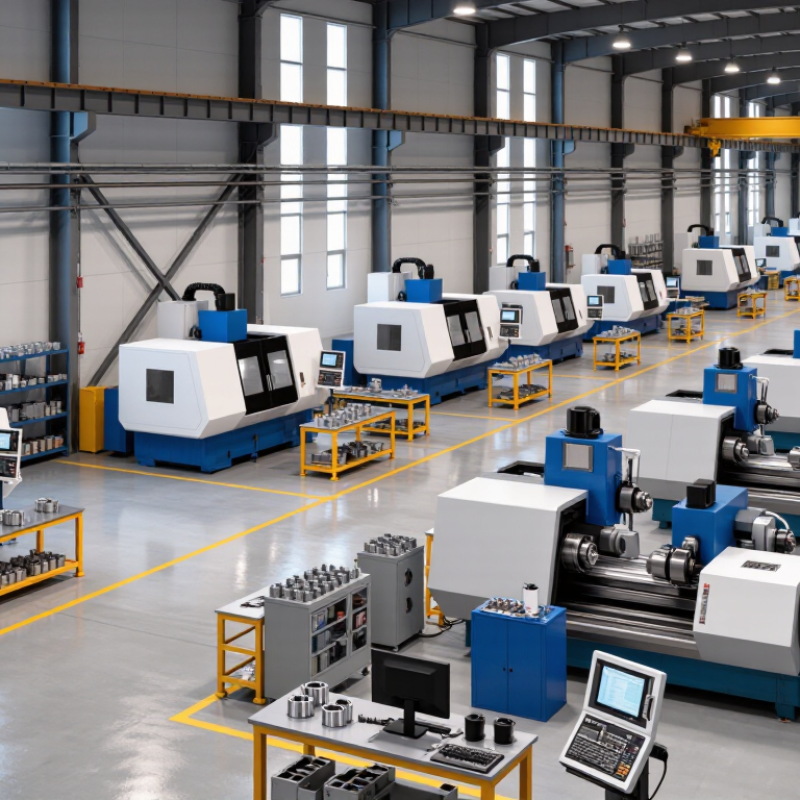
What Are the Top 10 CNC Machine Manufacturers in China?

How CNC Machine Manufacturing Developed in China

China’s CNC machine manufacturing grew alongside the country’s wider industrial transformation. Early production relied heavily on imported controls, components, and technical knowledge. Local factories gradually built capacity through equipment maintenance, engineering education, and practical shop-floor experience. The change was steady, not instant.

As domestic supply chains expanded, manufacturers gained more control over machine structures, spindle systems, drives, and software integration. Workshops that once focused on basic machining began producing equipment for more demanding tasks, including mold making and precision parts. Better sensors and digital controls also helped operators monitor cutting conditions and repeat jobs more consistently. Small gains mattered.

Growth has not been uniform. Some facilities use advanced automation, while others still depend on older equipment and manual adjustments. This contrast is easy to miss. It also explains why a machine’s real performance depends on more than its advertised specifications. Buyers should assess accuracy, service support, component quality, and performance over time. China’s development is best understood as an ongoing process: stronger engineering capability, wider production experience, and persistent work to close gaps in precision and reliability.

Criteria for Identifying Leading Chinese CNC Manufacturers

Assessing leading Chinese CNC manufacturers takes more than comparing machine prices or catalog specifications. A credible evaluation starts with the equipment’s intended work: material, part size, tolerance, and expected production volume. Check whether the manufacturer can explain spindle performance, axis travel, control options, and tool-change capacity in practical terms. Specific answers matter.

Manufacturing capability is another key criterion. Ask for process documentation, inspection records, and examples of completed machines similar to the one you need. If possible, review a factory acceptance test, observe a sample cut, and measure the finished part. Look for consistent machining, clean cable routing, and clear safety instructions. These details can reveal more than polished brochures.

Service coverage also deserves careful attention: confirm spare-parts availability, response times, commissioning support, and training arrangements. Certifications are useful evidence, but they do not replace direct checks. Some records may be incomplete; treat that as a question to investigate, not proof of poor quality.

Tips: Request a written specification and acceptance checklist before ordering. Compare the same test part across suppliers, and keep measurement results. Small gaps in documentation are easy to overlook. They can matter later.

Profiles of Ten Major CNC Machine Manufacturers in China

To keep this overview brand-neutral, the ten profiles focus on manufacturing strengths rather than company names. They describe common capabilities among major Chinese CNC builders, not a verified ranking. Buyers should confirm specifications, service coverage, and machine performance directly.

Profile 1: A high-volume builder supplies vertical machining centers for general metalworking. Check spindle runout and tool-change time.
Profile 2: A turning specialist makes CNC lathes for repeat production, where consistent chucking matters.
Profile 3: A premium-focused producer develops five-axis machines for complex parts. These need careful operator training.
Profile 4: A factory-oriented maker offers compact machines for workshops with limited floor space.
Profile 5: A large plant builds heavy-duty equipment for oversized workpieces. Foundation strength matters.
Profile 6: A precision-focused manufacturer targets mold and die work, where surface finish is closely inspected.
Profile 7: A flexible producer adapts machine configurations for varied production lines. Custom options can complicate maintenance.
Profile 8: A maker of economical machines suits entry-level shops, but buyers should compare included controls and tooling.
Profile 9: An automation-oriented builder pairs CNC equipment with robotic loading. Integration takes planning.
Profile 10: A service-led manufacturer emphasizes installation, training, and spare-parts access. That support can matter more than a brochure suggests.

These distinctions are useful, but imperfect: real capabilities vary by model, factory, and individual configuration.

Comparing Their Products, Technologies, and Market Strengths

What Are the Top 10 CNC Machine Manufacturers in China?

Comparing ten manufacturers means looking beyond catalog size. Product ranges may span basic three-axis machining centers, turning centers, and high-speed five-axis systems. Buyers should compare spindle speed, axis travel, positioning accuracy, tool capacity, and options for automation. A compact machine may suit a crowded workshop; a large gantry model handles heavier parts. Specs matter, but so does performance after years of daily use.

Technology differences appear in control systems, thermal compensation, tool monitoring, and support for robotic loading. The International Federation of Robotics reported that China installed 276,288 industrial robots in 2023, representing 51% of global installations. That figure signals a strong automation ecosystem, though it does not prove every machine integrates smoothly. Ask for a live machining test. Then inspect surface finish, cycle time, and tool wear.

Market strength also depends on delivery, service coverage, spare-parts access, and export experience. A broad product line can help buyers standardize equipment across sites, but it may hide uneven performance between models. Comparisons get messy. Published accuracy figures rarely show results under every shop condition. Request references from users making similar parts, and check how quickly technicians respond. The best fit is not always the most advanced machine.

What Are the Top 10 CNC Machine Manufacturers in China? — Comparing Their Products, Technologies, and Market Strengths
Profile Main Product Focus Typical Machine Types Technology and Capabilities Common Applications Market Strengths
1. Large-scale machine-tool group Broad portfolio of metal-cutting machine tools Vertical and horizontal machining centers; CNC lathes; selected heavy-duty machines Multiple machine configurations, in-house engineering, and integration with commonly used CNC control systems General machinery, automotive suppliers, and industrial equipment production Wide product coverage, established manufacturing infrastructure, and a service footprint developed over many years
2. Heavy-duty equipment specialist Large workpiece machining and heavy cutting Floor-type boring and milling machines; large gantry machines; heavy vertical lathes Large work envelopes, high-load structures, and machine configurations for complex or oversized parts Energy equipment, shipbuilding, rail transport, and large industrial components Experience with demanding workpiece sizes and production requirements that are beyond the range of standard shop-floor machines
3. General-purpose machining-center maker Versatile CNC equipment for production workshops Vertical machining centers; horizontal machining centers; drilling and tapping centers Common three-axis platforms, optional fourth-axis integration, and model-dependent automation interfaces Job shops, mold making, machinery parts, and subcontract manufacturing Broad applicability and a range of machine sizes and configurations for different production budgets
4. CNC turning specialist Turning and turn-mill production Slant-bed and flat-bed CNC lathes; turning centers; mill-turn machines Options can include live tooling, bar-feeder integration, and multi-axis machining, depending on model Automotive components, hydraulic parts, shafts, and precision turned components Strong alignment with high-volume rotational-part production and flexible turning-cell layouts
5. Five-axis and complex-part equipment maker Multi-face and simultaneous multi-axis machining Five-axis machining centers; trunnion-table machines; selected gantry configurations Coordinated multi-axis motion and integrated rotary axes; achievable accuracy and cutting performance depend on the machine configuration Aerospace parts, precision molds, medical components, and complex industrial parts Supports the consolidation of multiple setups into fewer operations for suitable workpieces
6. Gear and transmission equipment specialist Gear production and related precision machining CNC gear hobbing, shaping, grinding, and finishing equipment Processes are designed around gear geometry and finishing needs; available automation varies by machine and production line Automotive transmissions, industrial gearboxes, and power-transmission components Process-specific equipment and production knowledge for gear manufacturing workflows
7. Die-and-mold machining specialist High-speed and precision mold machining Vertical machining centers; high-speed milling machines; selected five-axis models High-speed spindle options, thermal-management features, and fine surface-finishing configurations vary across models Plastic injection molds, die casting, stamping dies, and precision tooling Equipment options suited to detailed cavity work and the surface-finish demands of toolmaking
8. Electrical-discharge machining specialist Non-traditional machining for conductive materials Wire-cut EDM; sinker EDM; small-hole EDM Material removal by controlled electrical discharge; useful for intricate shapes and hardened conductive materials Tool and die production, fine features, and parts that are difficult to machine by conventional cutting Dedicated expertise in EDM processes that complement milling and turning operations
9. Industrial automation-oriented machine maker Machines designed for integrated production cells CNC lathes; machining centers; palletized or robot-compatible configurations Automation interfaces and cell integration options; robot, pallet, and line compatibility depend on the selected system Repeat-part production, automotive supply chains, and lights-out or extended-shift manufacturing Can support higher equipment utilization when paired with suitable workholding, handling, and process planning
10. Compact and cost-focused CNC equipment maker Entry-level and small-footprint metalworking machines Compact CNC lathes; small vertical machining centers; drilling and tapping machines Standardized configurations focused on routine machining; control, spindle, and accuracy options vary by model Small manufacturers, training workshops, electronics components, and general job-shop work Accessible machine formats and a lower-complexity route to CNC production for suitable applications
Note: The profiles are anonymized product-category descriptions, not a verified ranking of individual companies. Product ranges, control compatibility, accuracy, automation options, and market coverage vary by manufacturer and model; confirm specifications directly against the relevant machine documentation.

How to Evaluate and Select a Chinese CNC Machine Supplier

China’s manufacturing scale is significant, but scale alone does not prove a supplier can meet your requirements. The International Federation of Robotics reported 276,288 industrial robots installed in China in 2023, representing 51% of global installations. This signals a deep automation ecosystem, not guaranteed CNC quality.

Ask each supplier for machine-specific inspection records, positioning accuracy, repeatability, and test conditions. Request a live cutting trial using your material, tool, and part geometry.

Watch the finished surface closely. It tells you more than a polished brochure.

Compare suppliers against the same checklist. Confirm control-system options, spindle power, axis travel, delivery lead time, warranty terms, and local service coverage. Ask how quickly common spare parts can be shipped, and request references from customers using similar machines.

Grand View Research estimated the global CNC machine market at USD 101.22 billion in 2023; market growth does not remove the need for due diligence. Calculate total cost, including installation, training, tooling, maintenance, and downtime.

A low quote can hide gaps. I would also record every promise in the purchase specification; verbal assurances are easy to misunderstand, and no checklist catches everything.

Article Source: