


Top Traffic VMS LED Display Manufacturers for Global Buyers
Urban traffic is not a static problem. Congestion shifts by hour, weather, and roadworks, so drivers need timely, readable information. INRIX’s 2023 Global Traffic Scorecard estimated that U.S. drivers lost an average of 42 hours to congestion that year. The figure offers useful context, though it cannot describe every city or road network. For traffic agencies, a traffic VMS LED display is one tool for communicating changing conditions at the roadside.
Performance depends on more than screen brightness. The U.S. Federal Highway Administration’s Manual on Uniform Traffic Control Devices sets guidance for changeable message signs, including their use and presentation. Buyers should also examine pixel pitch, viewing distance, automatic brightness control, weather protection, power use, and remote diagnostics. These details matter on a rainy night, when glare or a delayed update can reduce a message’s value. Small things count.
This guide introduces manufacturers serving global buyers and the practical questions worth asking before procurement. Compare documented test results, warranty terms, spare-parts access, and integration support—not just headline specifications. Regional standards and site conditions differ, so one product rarely fits every installation. A polished brochure is not proof of field reliability. Even a careful comparison has limits; independent references and a site-specific review can reveal what product sheets leave out.
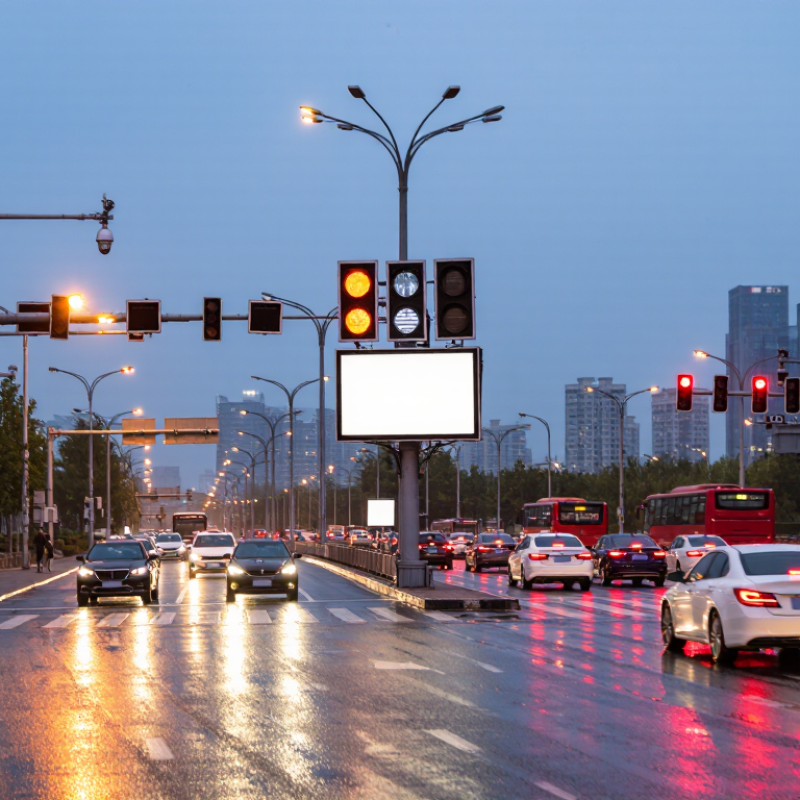
Understanding Traffic VMS LED Displays and Their Role
Traffic variable message signs (VMS) use LED displays to share changing information with drivers. Messages may report congestion, lane closures, travel times, or weather-related hazards. Unlike fixed road signs, a VMS can be updated as conditions change. Its value depends on more than bright pixels. Drivers need to read and understand the message quickly, often while moving through traffic.
A typical system combines an LED panel, a controller, power equipment, and a communications link. Display size, viewing distance, pixel spacing, and contrast all affect legibility. Brightness controls help keep text visible in daylight without appearing excessively bright at night. Clarity matters. Short wording and familiar symbols can reduce the time needed to interpret a message. Operators should also check that displayed information remains accurate as road conditions evolve.
Good planning includes routine inspection of modules, electrical connections, ventilation, and mounting hardware. Dust, moisture, heat, or a failed LED section can make parts of a message harder to read. Still, technical specifications alone cannot guarantee useful communication. A sign may be highly visible yet confusing if it carries too much information. That trade-off deserves regular review, including feedback from road users and maintenance teams. The simplest message is not always the most complete, and that tension has no perfect fix.
| Evaluation Dimension | What a Traffic VMS LED Display Does | Typical Specification or Consideration | Why It Matters to Global Buyers |
|---|---|---|---|
| Primary purpose | Displays changing road information, such as incidents, travel times, lane closures, warnings, and route guidance. | Message content and display operation should be matched to the road authority’s approved traffic-management practices. | Clear, timely messages help road operators communicate changing conditions to drivers. |
| Display format | Full-matrix LED panels can present text and, where permitted, simple symbols or graphics. Character-based signs are designed primarily for text. | Choose the format based on required message flexibility, viewing distance, and local sign rules. | The format affects the types of messages that can be shown and how easily they can be updated. |
| Visibility and brightness | LEDs produce light directly, allowing messages to be viewed in daylight and at night when brightness is appropriately controlled. | Brightness, contrast, viewing angle, and automatic dimming should be assessed for the installation location. | Day–night adjustment supports legibility while helping prevent excessive brightness after dark. |
| Pixel pitch and viewing distance | Pixel pitch is the distance between adjacent pixels; it influences image detail and the distance at which content can be read clearly. | Specify pixel pitch in relation to sign size, viewing distance, message layout, and required text height. | A suitable configuration helps keep messages legible without paying for detail that is not needed at the road-facing distance. |
| Outdoor protection | Roadside displays are exposed to rain, dust, sunlight, wind, and temperature changes. | Review enclosure ingress-protection ratings, corrosion resistance, drainage, and the installation environment. Ratings should be checked for the relevant enclosure surfaces. | Environmental suitability affects reliability, maintenance needs, and expected service life. |
| Operating temperature | Electronics and LEDs must operate within the temperature conditions expected at the site. | Compare the manufacturer’s stated operating and storage temperature limits with local climate and cabinet heating or cooling provisions. | Climate varies substantially by region, so a specification suitable for one market may not suit another. |
| Control and communications | A sign controller receives or stores messages and sends display instructions to the LED panel. | Common project interfaces include Ethernet, fiber, and cellular links; availability depends on the traffic-management network and site design. | Compatibility with existing control systems and secure network practices is essential for reliable operation. |
| Power and energy use | The display, controller, and environmental accessories require electrical power. | Confirm the site supply, power demand, electrical protection, standby behavior, and any backup-power requirements. | Accurate power planning supports safe installation and helps estimate operating costs. |
| Maintenance access | LED modules, power supplies, controllers, and protective components may require inspection or replacement over time. | Assess front- or rear-service access, spare-parts availability, diagnostics, and the safe maintenance procedure for the installation. | Practical service access can reduce lane closures and the time needed to restore a sign. |
| Standards and approvals | Traffic signs are subject to rules and technical requirements that vary by country and road authority. | Check applicable local standards and project approvals. Examples include EN 12966 for variable message traffic signs in relevant European contexts and MUTCD requirements for applicable United States installations. | Compliance should be confirmed for the destination market and specific project before procurement. |
| Procurement checks | A complete offer may include the sign, controller, mounting structure, communications interfaces, documentation, and commissioning support. | Request project-specific drawings, test documentation, warranty terms, delivery scope, spare-parts details, and after-sales support arrangements. | Comparing the full delivery scope—not only the LED panel—helps buyers evaluate suppliers on a consistent basis. |
Specifications and regulatory requirements vary by product, project, and jurisdiction. Confirm all values and approvals with the relevant road authority and supplier.