7 Tyre Spreader Buying Tips for Global Buyers
A tyre workshop can lose valuable time when a spreader slips, strains the operator, or fails to fit the wheel. These problems are easy to overlook in a catalogue. They become obvious when a technician is positioning a heavy tyre under a work light, with tools and vehicles competing for floor space.
Demand provides useful context, though not a complete buying answer. The U.S. Tire Manufacturers Association’s 2024 industry forecast estimated 334.2 million U.S. tire shipments that year, including original-equipment and replacement tires. That figure describes the United States, not the global market, and shipments do not directly measure workshop equipment demand. Still, it shows the scale of tire handling in one major market. Buyers elsewhere should compare local service volumes, tyre sizes, and operating conditions rather than treating one country’s numbers as a universal benchmark.
Choosing a Tyre Spreader means balancing capacity, adjustment range, stability, operator access, and maintenance support. Ask suppliers for working-load limits, compatible tyre dimensions, and clear instructions; verify these details against the products your technicians handle. A low purchase price can look persuasive. It may not reflect downtime, difficult positioning, or replacement-part availability. This guide presents seven practical buying tips for global buyers, from checking construction to assessing after-sales support. Some specifications still need a real-world trial. Paper claims alone are not enough.
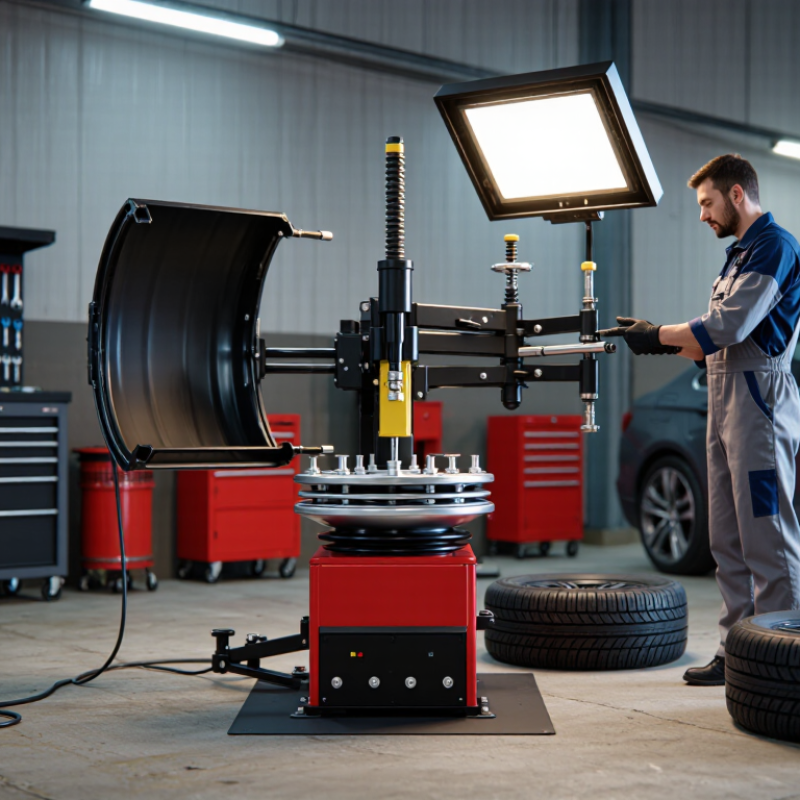
Understanding Tyre Spreaders and Their Intended Applications
A tyre spreader holds a deflated, demounted tyre open so a technician can inspect its inner liner and sidewalls. The tool is used during puncture assessment, casing checks, and suitable repairs. It does not replace proper diagnosis. A nail near the shoulder, for example, may make a tyre unsuitable for repair, even when the damage looks small from outside. The technician must follow applicable repair guidance and inspect the full casing.
The intended application should guide the machine’s size and design. A small workshop handling passenger tyres has different needs from a commercial-vehicle service area working with larger, heavier casings. Check the spreader’s capacity, opening range, stability, and access to the inspection area. A tyre that slips or sits awkwardly makes careful work harder. Fit the spreader to a clean, level work surface, and keep hands clear of moving parts. Simple, but important. One easy mistake is choosing by price before checking the tyre sizes actually handled each week. Usage estimates can also be wrong; review them after a trial period. A spreader that suits the common workload may be a poor choice for occasional oversized tyres, so verify those needs before buying.
Typical Tire Outside Diameter by Application
Use tire size and intended service to shortlist a spreader. The ranges below are approximate planning ranges in inches; actual tire dimensions vary by model and should be checked against the spreader’s specifications.
Buying tip: confirm the spreader’s opening range, load capacity, and compatibility with the tire types you service.
Matching Spreader Design to Tyre Types and Service Requirements
A tyre spreader should suit the tyres you handle most, not just the largest one in a catalogue. Motorcycle, passenger-car, and truck tyres differ in width, stiffness, and bead position. Check the spreader’s opening range against actual tyre measurements, then consider how its supports contact the sidewall. Broad, smooth contact points can help reduce local pressure marks. Fit matters.
Tips: Measure representative tyres before comparing models. Check the adjustment range, clamp shape, and working height. Ask whether the unit accommodates stiff sidewalls and low-profile designs. A few millimetres can matter when access is tight.
Service requirements shape the design choice, too. A busy workshop may need quick adjustments and a stable base for repeated use. A small mobile service may value a lighter unit that stores easily, though portability can mean less support on uneven floors. Match the spreader to your workspace, operator reach, and typical repair volume. Test it with a real tyre if possible; catalogue dimensions rarely show how awkward a particular bead can feel. Even careful measurements leave some uncertainty, so verify the fit before committing.
Evaluating Capacity, Adjustment Range, and Ease of Operation
7 Tyre Spreader Buying Tips for Global Buyers
Evaluating Capacity, Adjustment Range, and Ease of Operation
Start with the heaviest tyre and wheel assemblies your workshop actually handles. Check the spreader’s rated capacity, then leave a practical margin for occasional larger jobs. Do not confuse maximum capacity with everyday suitability. A machine can meet the load rating yet feel awkward when its opening range is too narrow. Compare the minimum and maximum spread widths with the tyre sizes on your service list, and confirm that the clamps reach securely without pressing on vulnerable sidewalls.
Adjustment should be quick and controlled. Ask operators to test the handles, locks, and working height using a representative tyre. Can one person make fine adjustments while keeping both hands clear of pinch points? NIOSH’s Revised Lifting Equation uses a 23 kg load constant only under ideal lifting conditions; reach, twisting, and repetition lower recommended limits. This is relevant when positioning heavy assemblies, though it does not rate a spreader itself. Small setup details matter.
Ease of operation deserves a real trial, not just a catalogue check. BLS reported 2.4 nonfatal injury and illness cases per 100 full-time-equivalent workers in U.S. private industry in 2023; this broad figure is not tyre-shop-specific. Still, it is a useful reminder to assess handling risks. Observe stability on the workshop floor, visibility around the tyre, and how easily the unit can be moved or stored. One detail is easy to miss: operators may adapt to a poor adjustment mechanism, but that does not make it a good fit. NIOSH, Applications Manual for the Revised NIOSH Lifting Equation (1994); U.S. Bureau of Labor Statistics, 2023 workplace injury and illness data.
Checking Safety Features, Durability, and Maintenance Needs
When assessing a tyre spreader, look beyond its rated capacity. Check for pinch-point protection, a stable base, clear controls, and an emergency stop that is easy to reach. Test the foot pedal and locking mechanism before purchase; neither should slip under normal use. Small details matter. The U.S. Bureau of Labor Statistics reported 2.6 million nonfatal workplace injury and illness cases in private industry in 2023. This broad figure is not specific to tyre equipment, but it underlines why safe operation deserves close attention.
Durability shows in the frame, welds, hinge pins, and moving arms—not just the paint. Look for corrosion protection and replaceable wear parts, then ask how components hold up under the expected daily workload. If possible, inspect a unit after repeated use. A fresh finish can hide little. It cannot tell you how a joint wears.
Maintenance needs should be practical for the workshop. Ask for a service schedule, spare-part availability, and clear instructions for inspecting hoses, seals, fasteners, and pivots. The U.S. Occupational Safety and Health Administration’s machine-guarding guidance is a useful reference for identifying hazards around moving parts. A checklist helps, but it may miss awkward shop-floor habits; watch operators use the spreader, and note where hands naturally reach.
Comparing Suppliers, Warranty Terms, and Total Ownership Costs
When comparing tyre spreader suppliers, look beyond the quoted price. Ask for a written specification covering opening range, load capacity, adjustment method, and compatibility with your workshop’s equipment. Request a demonstration using a tyre size you handle often. Watch how steadily the arms move and how easily an operator can reach the controls. Small details matter.
Read warranty terms line by line. Check what is covered, how long coverage lasts, and whether travel, labour, or replacement parts are excluded. Ask how service requests are handled and which wear parts the supplier keeps in stock. A long warranty is not automatically a useful one. Get the response process in writing, too.
Estimate total ownership costs over several years. Include delivery, installation, operator training, routine inspection, spare parts, and expected downtime. Compare energy needs if the spreader uses a powered system. A cheaper unit may cost more when a common component takes weeks to arrive. That happens. Still, cost forecasts are estimates; actual repair needs depend on use, maintenance, and working conditions. Keep a modest allowance for the unexpected, and check whether the supplier can provide parts and technical support where your workshop operates.